
Homestead Storm Damage
Rapid Structural Stabilization After Severe Weather
Tropical weather systems in South Florida frequently force wind-driven rain through roof soffits and damaged tile, saturating attic insulation long before drywall ceilings show visible sagging.
The median owner-occupied home across this municipality was built in 2001, making roof flashings and exterior envelopes particularly susceptible to wind shearing under Census ACS 5-year benchmarks.
During a recent tropical depression near the Redland agricultural border, our team secured three punctured tile roofs and extracted hundreds of gallons of rainwater before ceiling framing collapsed.
When severe weather strikes, homeowners often describe how property owners question whether high-dollar remediation quotes demanding full negative air containment and total wall teardowns represent standard industry practice or contractor price gouging.
We demystify the recovery process by executing honest physical inspections alongside professional water damage restoration across South Florida that prioritizes structural drying over unnecessary demolition.
Every site assessment utilizes non-invasive moisture meters and calibrated thermal sensors to map moisture boundaries without tearing down unaffected drywall.
Our Emergency Storm Mitigation Sequence
Scientific structural drying under IICRC S500 takes 3 to 5 days for clean water and a week or more for contaminated water, never just 24 hours. When dealing with sudden storm washouts, scheduling specialized flood cleanup for storm intrusions ensures moisture is thoroughly eliminated from foundations and interior framing before permanent repairs begin.
- Immediate Hazard Assessment And Emergency Extraction. A pattern echoed in public discussions is that storm-induced power outages disable sump pumps, resulting in basement flooding with standing water and saturated carpeting requiring urgent extraction. Our technicians arrive with portable generator power and industrial truck-mounted extractors to remove standing floodwater immediately before building materials delaminate.
- Structural Moisture Mapping And Containment. Emergency mitigation must thoroughly extract water and verify dry standards before rebuilding begins to avoid sealing wet materials into walls. We map hidden wet pockets inside wall assemblies and subfloors using infrared imaging and penetrating electrical probes.
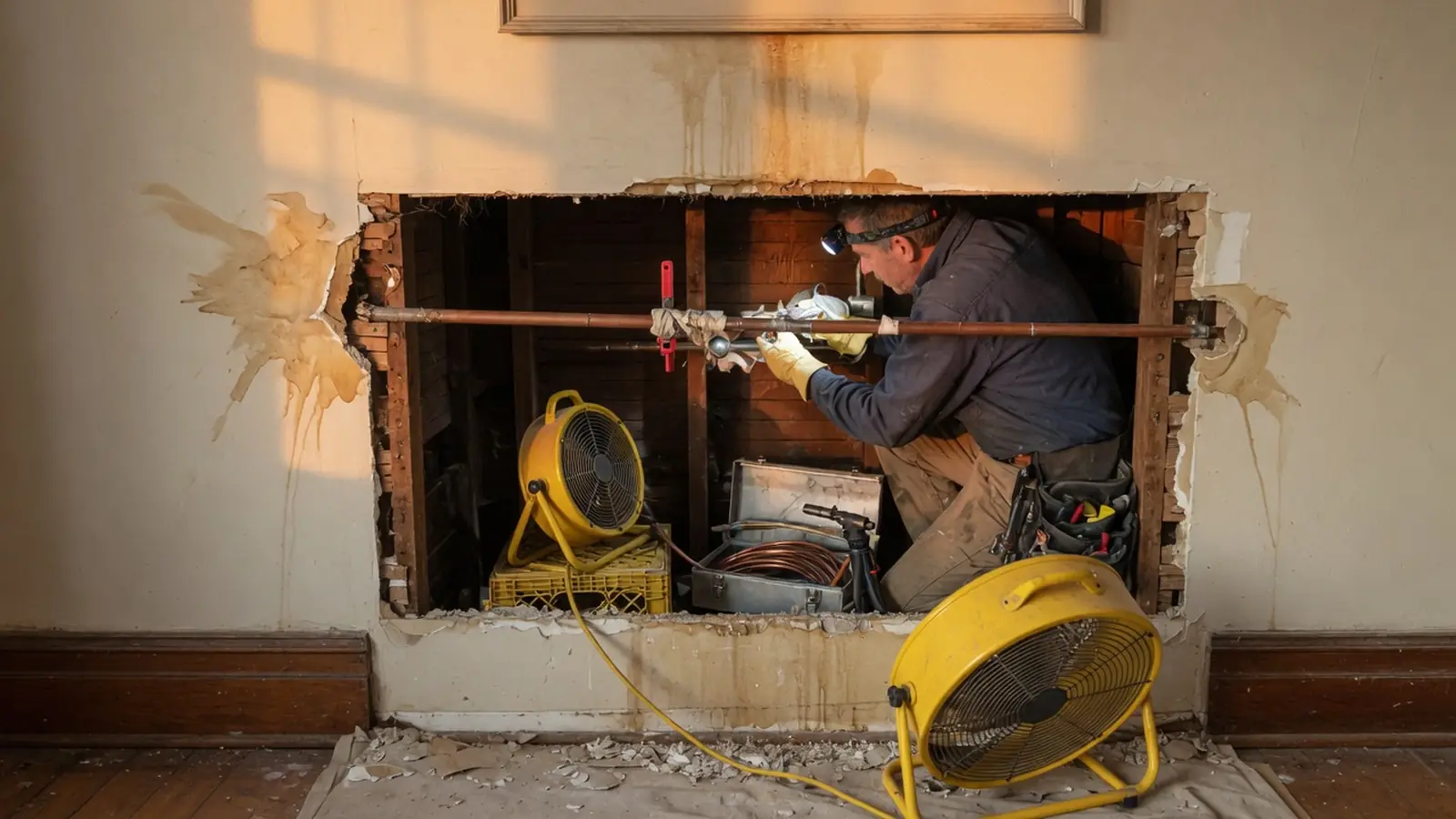
- Industrial Dehumidification And Air Movement. We deploy commercial-grade low-grain refrigerant dehumidifiers and high-velocity axial air movers to pull moisture out of dense hardwood and framing studs. Daily psychrometric monitoring tracks relative humidity, grains per pound, and ambient temperature until target equilibrium moisture content is achieved.
- Antimicrobial Treatment And Rebuild Clearance. Technicians apply botanical antimicrobial washes to prevent microbial proliferation across porous wood framing. We provide verified dry certificates and moisture logs that prove structural compliance so your licensed reconstruction contractor can reinstall drywall without risk of hidden rot.
Data-Driven Restoration Built For South Florida Climates
Severe storms bring erratic impacts across our region. Local hail activity is uneven year to year: 2025 logged 351 radar signatures while 2021 logged only 25, a 14.0x spread that leaves many roof tiles cracked and undetected. Comparing the two halves of 2021-2025 around our sector, radar hail signatures went from 185 to 540, a rise of 192% that created widespread microscopic entry points for wind-driven moisture. When neglected, trapped moisture creates indoor mold, making effective mold remediation to halt fungal spores essential before completing sheetrock restoration. We stand behind our workmanship standards by delivering verified moisture logs on every job, proving every stud is dry before we sign off.
Emergency Water Extraction
High-capacity submersible pumps and truck-mounted vacuum units quickly remove standing storm water from ground floors, living areas, and crawlspaces. Rapid extraction stops moisture from migrating upward into drywall and structural framing.
Commercial Storm Mitigation
Commercial water damage incidents frequently originate from fire sprinkler system failures and extreme weather in addition to plumbing leaks. Our rapid response crew deploys industrial power distribution, large-scale desiccant dehumidifiers, and negative air setups to get businesses operational quickly.
Insurance Claim Documentation
Standard property insurance covers sudden, accidental pipe bursts but excludes slow unaddressed leaks and exterior storm flood damage. We provide comprehensive photo evidence, moisture mapping logs, and line-item estimates to help adjusters differentiate wind-driven intrusion from unaddressed wear.
Our Approach To Regional Disaster Recovery
We maintain rapid response vehicles stocked with commercial dehumidifiers, moisture meters, and extraction equipment ready for immediate dispatch across South Dade communities. Our restoration methodology focuses on transparent dry standards and precise psychrometric monitoring to return your property safely to pre-loss condition.
- 10Zip Codes Served
- 8Service Areas
- 3Services Offered
Read verified feedback from local property owners who called our team after severe wind and rain events damaged their homes.
“When high winds ripped off our roof ridge, the crew coordinated with county inspectors and pulled emergency stabilization permits without any delays. They documented every structural support beam according to local building code so our final municipal sign-off went through on the first pass. That thorough paperwork saved us weeks of administrative headaches.”
Julian M.
“Every afternoon during the drying phase, the team sent detailed photos and psychrometric moisture meter readings directly to my phone. I never had to track down a project manager because their automated text updates explained exactly what was drying and what came next. Their daily consistency gave my family total peace of mind while we stayed at a hotel.”
Elena R.
“Rather than tearing out all my custom tongue-and-groove ceilings, their lead technician explained how targeted cavity injection drying could salvage the original cypress boards. That technical choice saved us over six thousand dollars in replacement carpentry while fully eliminating the trapped moisture behind the vapor barrier. It proved they genuinely cared about preserving our home rather than running up a demolition bill.”
Carlos D.
“A secondary tropical squall halted exterior tarping on our second day, but the crew brought in auxiliary indoor air scrubbers to keep moisture from spreading internally during the delay. As soon as lightning cleared, extra technicians arrived to double down on drying and got the entire house back on schedule before the weekend. Their ability to pivot around unpredictable Florida weather was outstanding.”
Valerie P.
Frequently Asked Questions
How long does structural drying take after storm water intrusion?
Scientific structural drying typically takes three to five days for clean rain intrusion and seven or more days for contaminated floodwater. Under IICRC S500 protocols, structural materials must reach documented dry standards rather than relying on arbitrary 24-hour schedules before wall rebuilding can safely begin.
Does homeowner insurance cover storm damage restoration?
Standard insurance policies cover sudden wind damage and roof leaks but exclude slow unaddressed moisture seepage or exterior ground flood surges. We provide comprehensive documentation, thermal moisture maps, and itemized billing to demonstrate to your carrier that water ingress was the direct result of storm impact.
Why is water extraction necessary before starting drywall repairs?
Emergency mitigation must thoroughly extract water and confirm dry standards before rebuilding to avoid sealing wet materials inside wall framing. Hasty reconstruction over damp studs traps ambient moisture, causing structural dry rot, mold proliferation, and recurring sheetrock crumbling.
Can commercial facilities stay open during emergency storm mitigation?
Commercial facilities can frequently remain operational by utilizing localized containment zones and directional negative air pressure equipment. Commercial water damage often stems from sprinkler malfunctions during high-wind stress, so we isolate affected wings to protect inventory while business functions continue.
What happens if storm water enters an attic through roof soffits?
Wind-driven rain forced through roof soffits rapidly saturates attic insulation, requiring rapid extraction before ceiling drywall buckles downward. Saturated fiberglass holds heavy moisture out of sight, which is why our technicians use thermal imaging cameras to inspect attic cavities even when ceilings appear dry.