
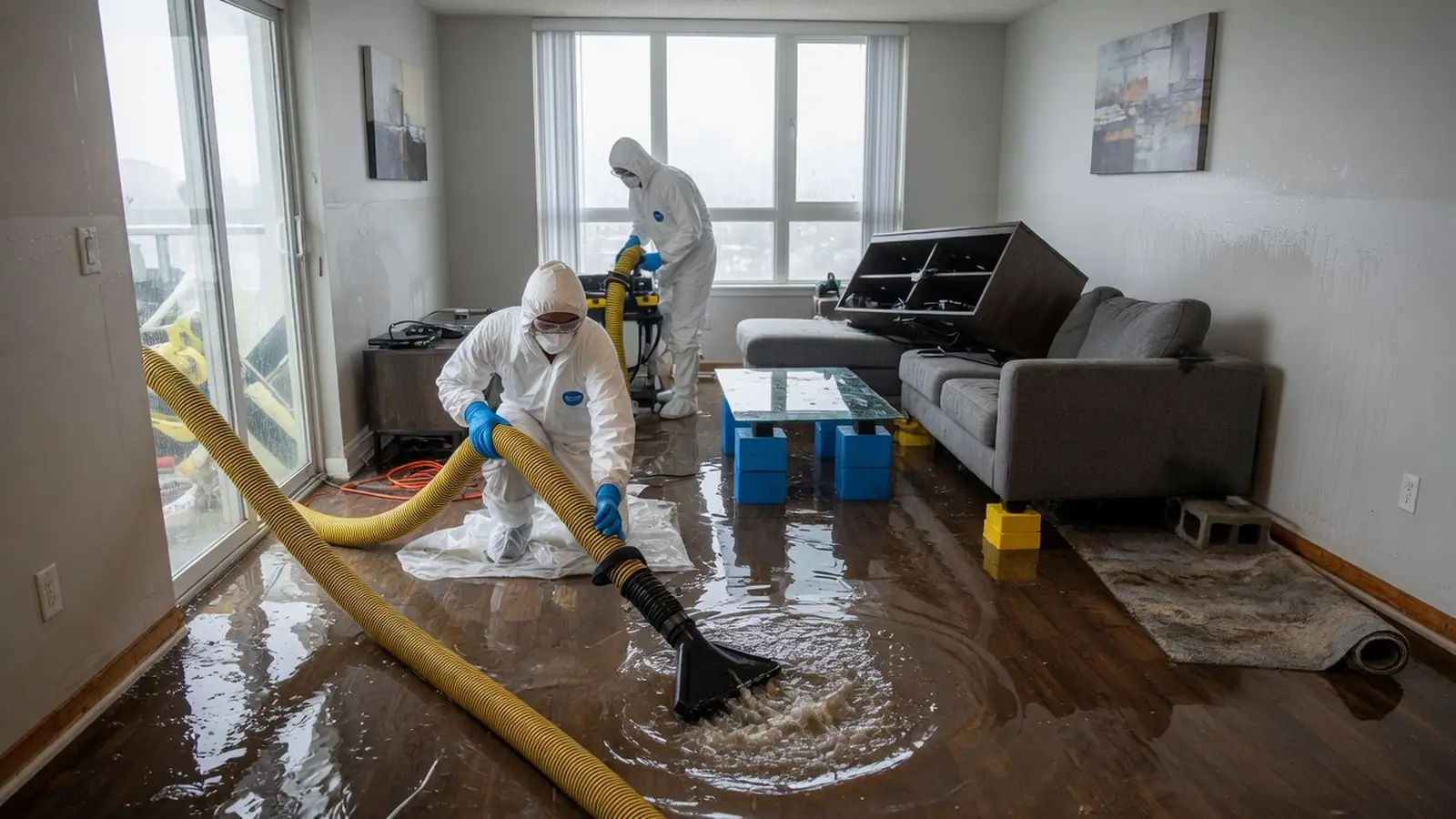
Water Damage Restoration Homestead FL
Decades Of Local Restoration Experience
Our restoration technicians bring dedicated field experience resolving complex structural water intrusion across South Dade neighborhoods.
About 8% of housing units in the local area (1,978 of 26,106) were built before 1960, the era of galvanized steel supply lines and cast iron drains that frequently corrode and rupture.
About 6% of housing units in the local area (1,517 of 26,106) were built in the 1960s, overlapping the years aluminium branch wiring was installed that necessitates careful thermal inspection during structural drying.
About 20% of housing units in the local area (5,237 of 26,106) were built in the 1970s and 1980s, overlapping the years polybutylene supply piping was commonly installed and prone to sudden joint failures.
About 33% of housing units in the local area (8,732 of 26,106) were built before 1980, the period when asbestos-containing materials and lead paint were still in use and require controlled containment during demolition.
A pattern echoed in public discussions is that homeowners encounter unexpected high costs and billing confusion regarding daily rental rates for commercial dehumidifiers and air scrubbers deployed during water mitigation, which is why our team provides clear, upfront equipment pricing before placing any units.
When heavy storm surges flood ground floors, property owners can find out how our team handles complete flood cleanup to safely extract water and salvage interior framing.
We monitor every drying chamber daily with precision moisture meters to ensure your framing reaches verified dry standards before reconstruction begins.
Step-by-Step Moisture Extraction
Our structured remediation process halts secondary damage and dries your structural framing down to verified baseline moisture levels.
- Damage Assessment & Envelope Securing. Storm restoration crews must secure the building envelope with emergency roof tarping and window board-ups before deploying drying equipment to prevent ongoing wind-driven rain intrusion.
- Rapid Water Extraction. Technicians utilize industrial submersible pumps and truck-mounted vacuum extractors to remove standing floodwater from tile, terrazzo, and concrete subfloors.
- Antimicrobial Treatment & Wall Cavity Prep. As homeowners often describe in online forums, homeowners struggle with selecting the right antimicrobial sprays and fungicides to treat stripped wall framing before mold sets in following indoor floodwaters, which is why our certified technicians apply EPA-registered professional botanicals to all structural studs.
- Controlled Structural Dehumidification. A frequent frustration shared by property owners is that homeowners battle lingering indoor humidity, cupped baseboards, and swollen trim weeks after storm exposure due to inadequate moisture assessment and dehumidification, which we resolve using high-capacity commercial desiccant systems.
Transparent Standards & Dedicated Moisture Control
Our commitment centers on meticulous moisture detection and strict adherence to IICRC structural drying standards on every residential callout.
In post-storm community forums, homeowners discover ceiling water intrusion and soaked drywall following severe weather, debating whether to submit an insurance claim or pay out-of-pocket to avoid risk of policy non-renewal, so we provide comprehensive line-item moisture assessments to help you choose the best financial path.
If a squall damages roof flashing and saturates ceilings, you can explore our specialized response for severe storm damage to protect building integrity.
We never consider a mitigation job complete until calibrated hygrometer and pin probe readings verify that internal framing has returned to normal dry equilibrium.
Emergency Water Extraction
Rapid removal of standing floodwater and plumbing leaks utilizing industrial truck-mounts and weighted extraction pads to salvage flooring materials.
Structural Drying & Dehumidification
Deploying commercial low-grain refrigerant dehumidifiers and axial air movers to extract trapped moisture from drywall, sill plates, and concrete subfloors.
Post-Flood Sanitation & Moisture Mapping
Deep sanitization using EPA-registered antimicrobial solutions paired with calibrated moisture meters to verify framing reaches dry standard before repairs begin.
Reliable Service Across South Dade Communities
Our technicians maintain rapid dispatch readiness to stabilize residential and commercial properties immediately after plumbing failures and severe tropical storms.
- 8Zip Codes Served
- 6Service Areas
- 3Services Offered
Read firsthand accounts from local property owners who trusted our technicians to extract floodwaters, dry structural framing, and restore their living spaces after severe leaks.
“Every mitigation cost was outlined on day one with zero hidden fees. The crew explained the equipment rates clearly and stuck exactly to the written estimate when drying out our flooded hallway. Dealing with honest pricing during a stressful emergency made all the difference.”
Marcus T.
“Watching them cut away the soaked drywall along perfectly level lines convinced me of their skill. The team set up containment plastic with airtight tape joints and left the framing completely clean and vacuumed. Their neatness while running noisy commercial drying gear was remarkable.”
Elena R.
“I already passed their number to my next-door neighbor who had a water heater failure. The crew arrived within forty minutes of our call and saved our hardwood flooring from warping. Nobody else in the area delivers this level of fast, dependable emergency care.”
David K.
“While pulling baseboards behind our kitchen cabinets, the crew uncovered hidden pipe decay inside the wall cavity. Instead of stopping progress or panicking, the team immediately capped the line safely and kept the drying schedule right on track. They resolved an unexpected complication without adding any stress to our family.”
Sophia M.
Frequently Asked Questions
Can water extraction and structural drying begin immediately if electrical power is knocked out across the neighborhood following a major storm?
Yes, technicians deploy heavy portable generators to power extraction pumps and drying equipment immediately without relying on local grid power. Restoration crews arrive on-site with self-contained power generation units so that standing water extraction, air filtration, and structural drying can proceed without waiting for utility service restoration.
How does regional severe weather and hail impact roof leaks and moisture intrusion?
Severe hail fractures roof membranes, allowing heavy rain to enter attics, soak ceiling drywall, and trigger destructive structural water damage. NOAA radar recorded 948 hail signatures within about 15 miles of the local area between 2021-2025 (2021: 25, 2022: 160, 2023: 223, 2024: 189, 2025: 351). The heaviest recent hail year around the area was 2025, with 351 radar hail signatures inside a 15-mile radius, which caused unseen punctures in roofing layers that later permitted wind-driven water intrusion.
How long does the structural drying process usually take after an indoor flood?
Complete structural drying typically takes three to five days depending on water volume, ambient humidity levels, and the specific materials affected. Technicians conduct daily psychrometric readings to track moisture content in wood studs and concrete subfloors until they return to normal dry standards.
Should I file an insurance claim or pay out-of-pocket for water mitigation?
Filing depends on whether total restoration costs exceed your deductible and whether prior claims create a risk of insurance policy non-renewal. Homeowners discover ceiling water intrusion and soaked drywall following severe weather, debating whether to submit an insurance claim or pay out-of-pocket to avoid risk of policy non-renewal, so we supply detailed moisture logs to assist your evaluation.
Why must commercial dehumidifiers run continuously during water mitigation?
Running dehumidifiers continuously prevents structural wood framing from warping and stops mold spores from germinating in warm, humid conditions. Continuous airflow and moisture extraction draw bound water out of drywall and baseboards, eliminating the high humidity that causes secondary rot.